
.svg)
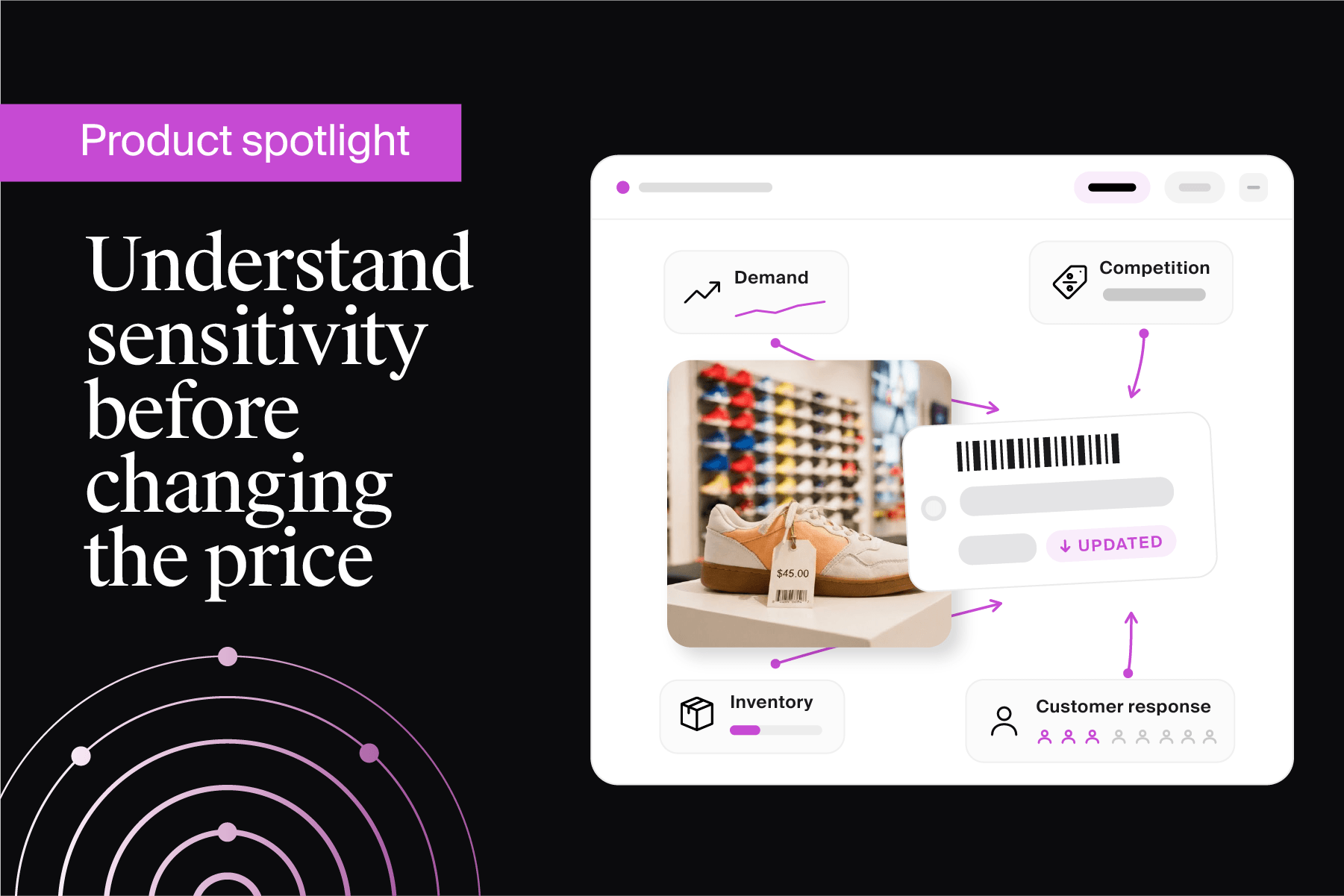
Demand shifts, competitors move and the same product can sell differently in every location. Prices that stay fixed through all of it can leave revenue and margin on the table.
Dynamic Pricing by invent.ai helps retailers optimize regular prices throughout the life of a product, bringing together demand, competition and inventory position to identify where prices may need to change.
Remi, the supervisory AI agent at the core of invent.ai’s AI-decisioning platform, evaluates them in one decisioning flow and surfaces the price changes worth considering across products, locations and channels. Retailers set the objective, including revenue, margin or a balance of the two, and Remi optimizes toward it while showing the reasoning behind every recommendation.
Where Dynamic Pricing sits
Dynamic Pricing manages regular prices, the everyday price that moves with demand, competition and inventory throughout the life of the product. It works alongside promotions, which optimizes the depth and timing of temporary offers, and markdown, which manages end-of-life price reductions and sell-through.
One underlying demand model connects all three, helping ensure a decision in one area doesn’t contradict the other two.
See where pricing opportunities exist
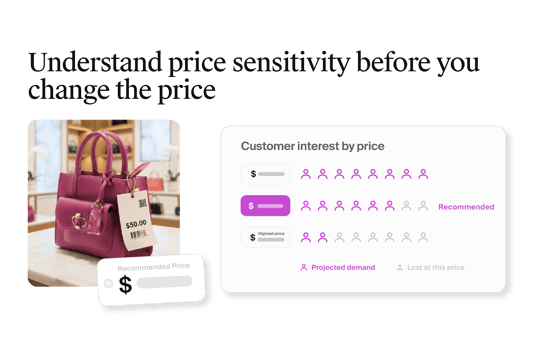 Managing thousands of prices manually makes it difficult to know where to focus. Remi continuously analyzes the assortment and identifies where the data points to a real opportunity, whether that’s a price increase demand can absorb or a decrease that can unlock additional volume.
Recommendations consider:
- Demand and sales trends
- Price elasticity, estimated per product and location
- Inventory position, on-order quantities and projected weeks of supply
- Competitive pricing, when available
- Sales projections at different price points
- Substitution and cannibalization effects
Instead of working through every SKU, pricing teams can focus on the products where the data points to a meaningful opportunity.
Price with inventory in view
Demand is only part of the pricing decision. What retailers have in stock, what is on order and how quickly inventory is expected to sell can all influence whether a price change makes sense.
Remi brings inventory signals into the pricing decision, helping teams evaluate potential price changes alongside inventory position and projected supply.
That gives pricing teams a view of not just what customers may pay, but what the business needs to sell and when.
Understand how customers respond to price
A price change only matters if you understand how it can affect demand. Invent.ai uses price elasticity to estimate how sensitive a product's demand is to price changes. The AI-powered platform evaluates different price points and projected sales to help determine where a price adjustment could support revenue and margin.
That means teams aren't just asking whether they can change a price. They're evaluating what could happen if they do.
Get recommendations built around your strategy
Dynamic pricing isn't about letting an algorithm decide every price. Retailers have price ladders, margin floors, price-family rules, competitor positioning and category goals that need to remain at the center of every decision.
With invent.ai, these requirements become guardrails Remi works within. Retailers define the rules and constraints, while Remi handles the analysis at scale.
The AI handles the analysis, but teams remain in control of the decision.
See the recommendation and the reasoning
 A pricing recommendation is only useful if teams can understand why it was made.
Invent.ai brings pricing recommendations into a dedicated price optimization dashboard where teams can review recommended price changes alongside the information behind them. Remi shows the factors behind each recommendation, including relevant demand, elasticity, competitive and inventory signals, along with projected revenue and margin outcomes. Teams can review the potential change before deciding whether to approve or ignore it. The workflow is simple: identify the opportunity, understand the reasoning and decide what to do next.
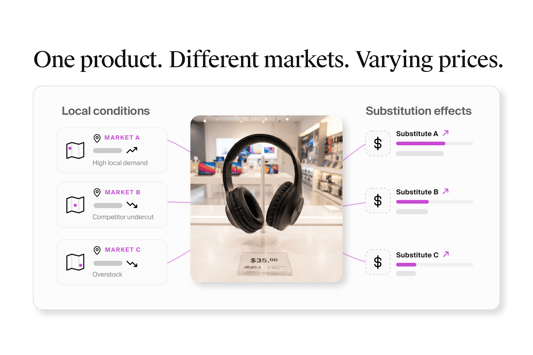
The same product doesn't always need the same price everywhere. Demand and competitive conditions can vary by location, while changing the price of one product can also influence demand for similar products.
Invent.ai supports localized price optimization and incorporates substitution effects into its pricing models, helping teams evaluate pricing decisions in the context of each market and the broader assortment. This means teams can consider the potential effects of a pricing change beyond a single SKU or location, while keeping decisions aligned with their overall pricing strategy.
From data points to pricing decisions with invent.ai
The real value of dynamic pricing comes from being able to apply this intelligence across a large assortment. Invent.ai can evaluate pricing opportunities across products, locations and channels, bringing demand, competition, inventory and customer response into one decisioning process.
Instead of manually reviewing every price, teams can focus on the opportunities where the data suggests action is worth considering.
The best price isn't simply the one that works today. It's the one that responds when retail conditions change.
Ready to make every price count? Talk to an invent.ai retail AI expert and see how AI-driven dynamic pricing can help your team identify opportunities, protect margin and respond to changing market conditions.