
.svg)
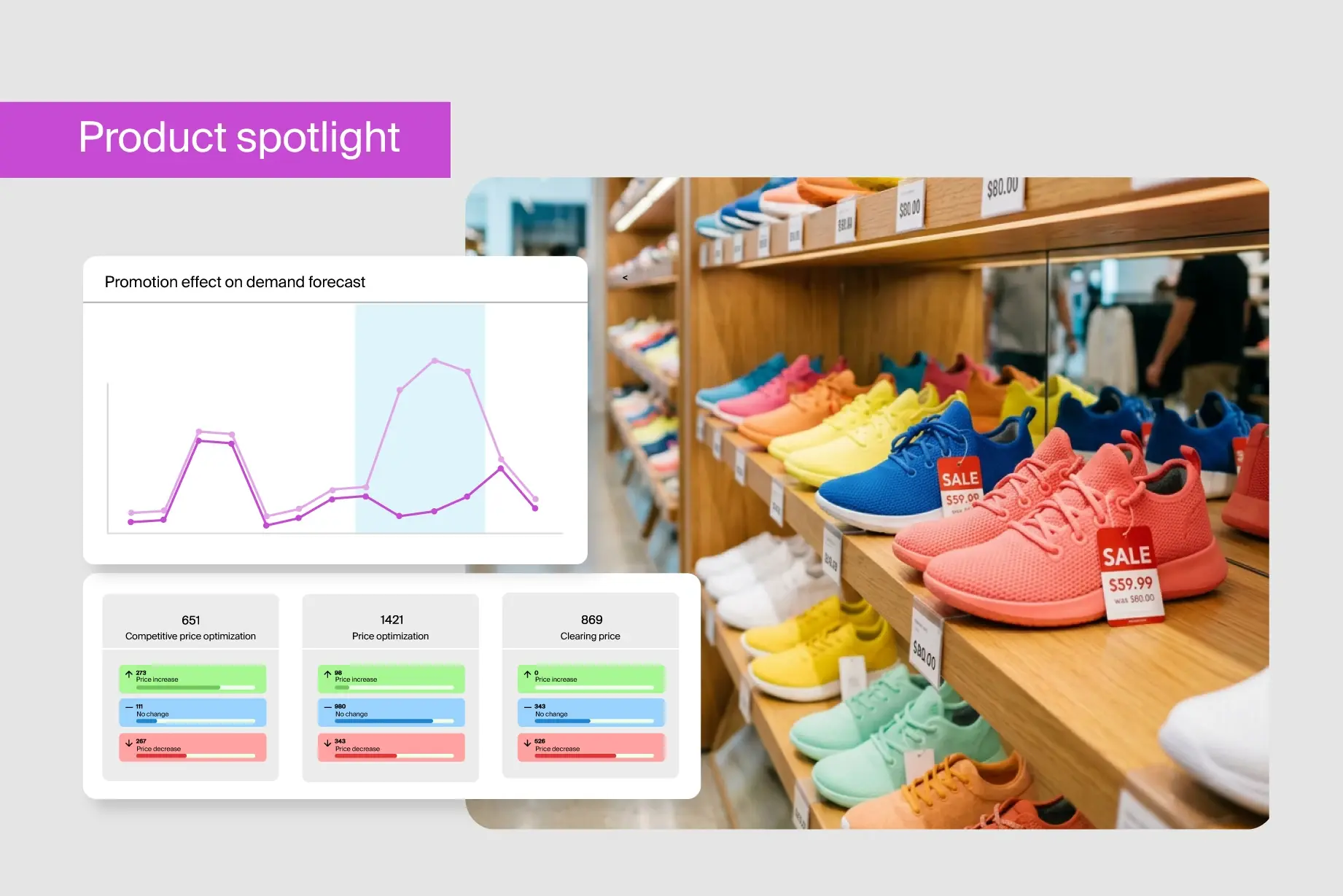
In many retail organizations, markdowns are still viewed as a late-stage mechanism for clearing inventory. Once products slow down, price is reduced to create movement and free up space.
This approach treats markdowns as an outcome of poor sell-through rather than a strategic tool within the broader pricing system. As a result, decisions are often delayed, standardized and disconnected from the conditions that actually drive performance.
The effect shows up as uneven discounting, missed revenue opportunities and avoidable margin loss across the assortment.
The limitations of static markdowns
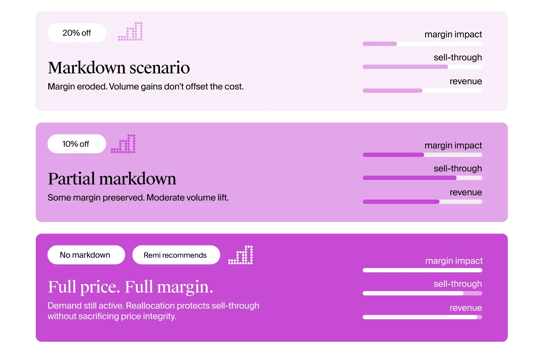 Most markdown strategies rely on fixed calendars and pre-set rules. Once pricing plans are defined, they tend to remain in place even as demand conditions shift.
This creates a gap between market reality and pricing response. Inventory moves dynamically, but markdown decisions follow a rigid schedule, which limits responsiveness when it matters most.
In complex retail environments, this rigidity becomes even more visible. The same markdown approach is often applied across stores and regions that behave very differently in practice.
How invent.ai changes markdown decisions
With invent.ai, markdown optimization is treated as a continuous, signal-driven decision process rather than a fixed-stage planning activity.
Pricing teams are continuously informed by live inventory position, demand velocity and sell-through performance. Instead of progressing through predefined markdown phases, decisions adjust dynamically as conditions evolve.
This shifts markdowns from isolated actions into part of an ongoing optimization loop that connects planning and execution.
From rules to context-driven decisions
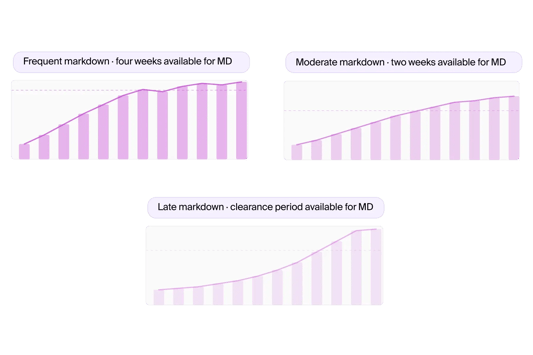 The biggest shift is not just speed of adjustment, but context in decision-making.
A markdown is no longer evaluated only by product age or basic thresholds. It’s assessed in relation to broader inventory conditions and financial outcomes across the network.
This helps avoid isolated decisions that solve a local issue but create imbalance elsewhere. Pricing actions become more coordinated, reflecting both store-level realities and enterprise-level goals.
Exceptions embedded in the decision flow
In traditional systems, exceptions surface after execution through reporting cycles or retrospective analysis, often too late to influence outcomes.
Invent.ai brings exceptions directly into the markdown decision workflow. They are surfaced at the point of decision-making , not after execution, allowing planners to adjust actions while they are still being formed, reducing reactive firefighting and improving the consistency between planning intent and execution reality.
Markdown optimization as a continuous performance lever with invent.ai
AI markdown recommendations maximize clearance revenue of the products, including end-of-live and seasonal. When markdown optimization is connected to real-time inventory and demand signals, its role shifts. It’s no longer a clearance mechanism, but a continuous lever for managing inventory performance and protecting margin across the lifecycle.
This enables more precise discounting, better timing, and stronger consistency across locations. Instead of relying on end-of-cycle corrections, retailers can actively steer outcomes as conditions change.
With invent.ai markdowns become part of a coordinated decision system, driving performance rather than simply reacting to it.
Get in touch to learn how continuous markdown optimization can support better retail decision-making across your network.