Demand signals → Root-cause analysis → Explanation → Recommendation
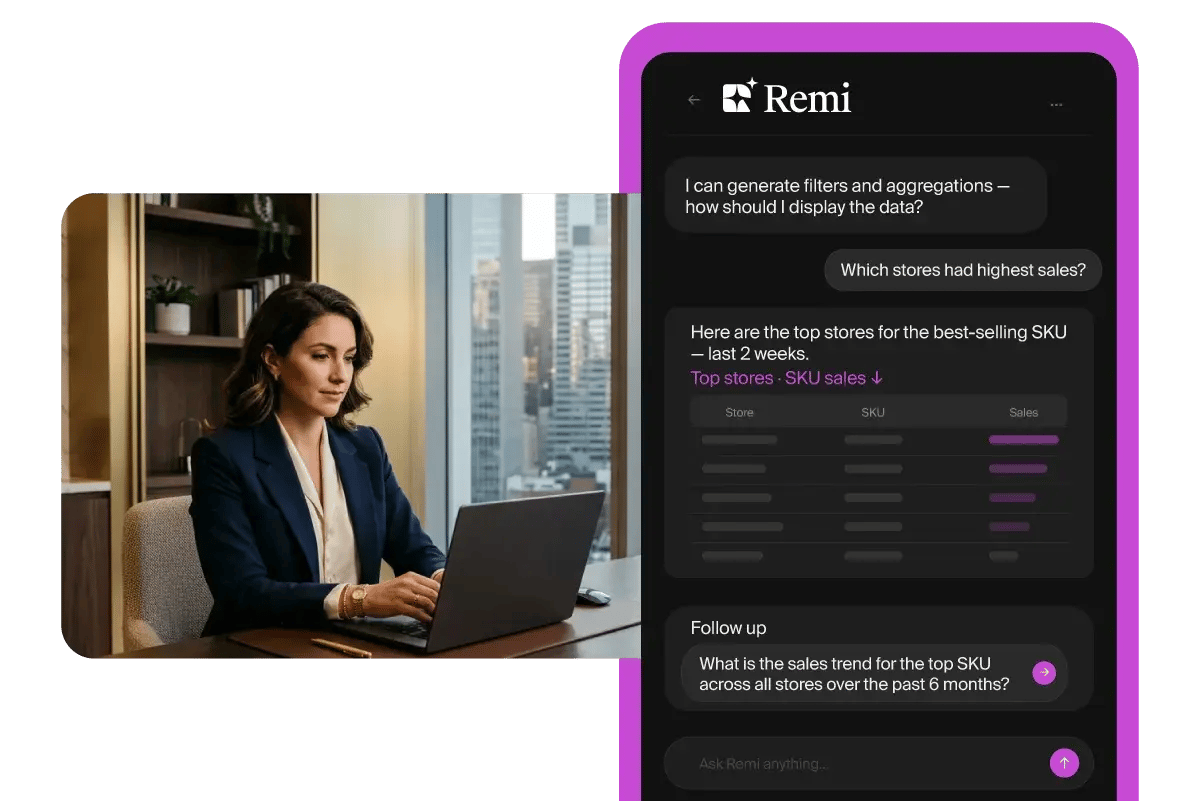
Reasoning agents continuously interpret retail signals, transforming raw alerts into structured explanations that teams can understand immediately.
Explaining retail, one signal at a time. Retail teams can detect change, but many struggle to understand it. Systems surface alerts across demand, inventory and pricing, but they rarely explain what caused them. Teams are left to manually connect fragmented data across reports, tools and functions to piece together an answer.
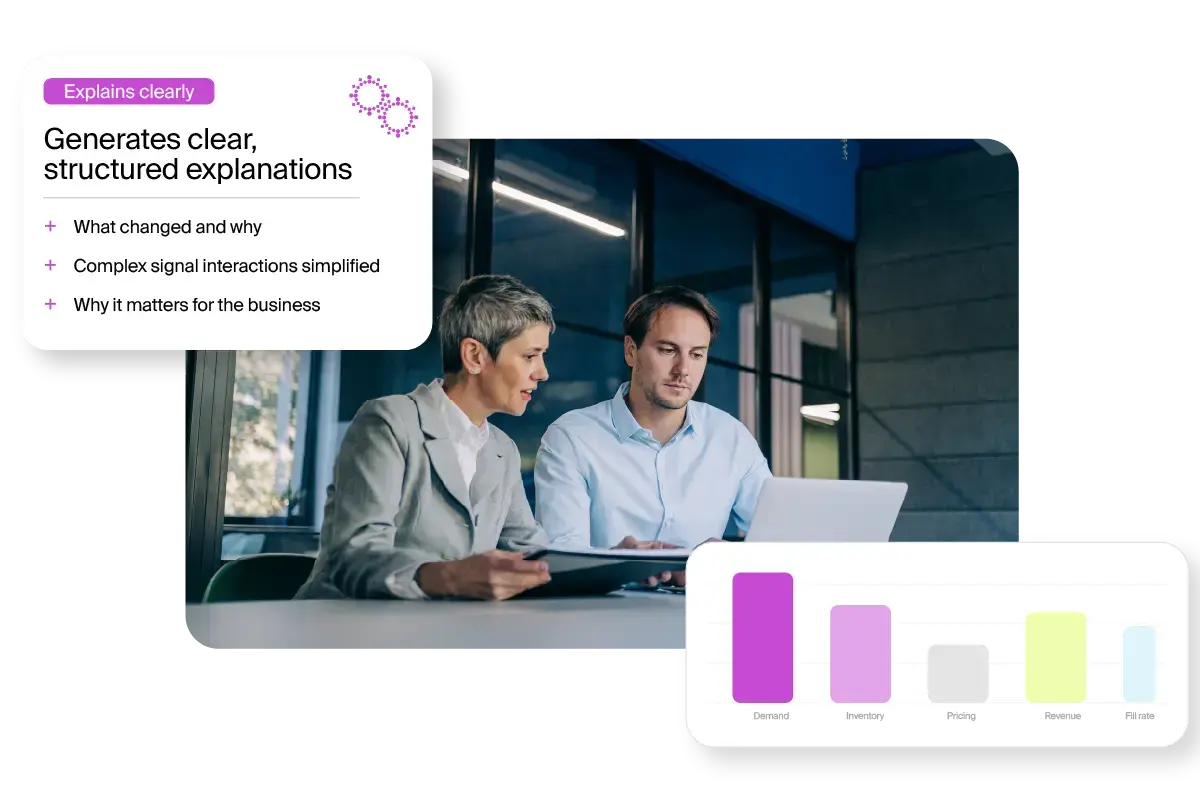
Reasoning agents remove that gap by turning every signal into a clear, structured explanation.
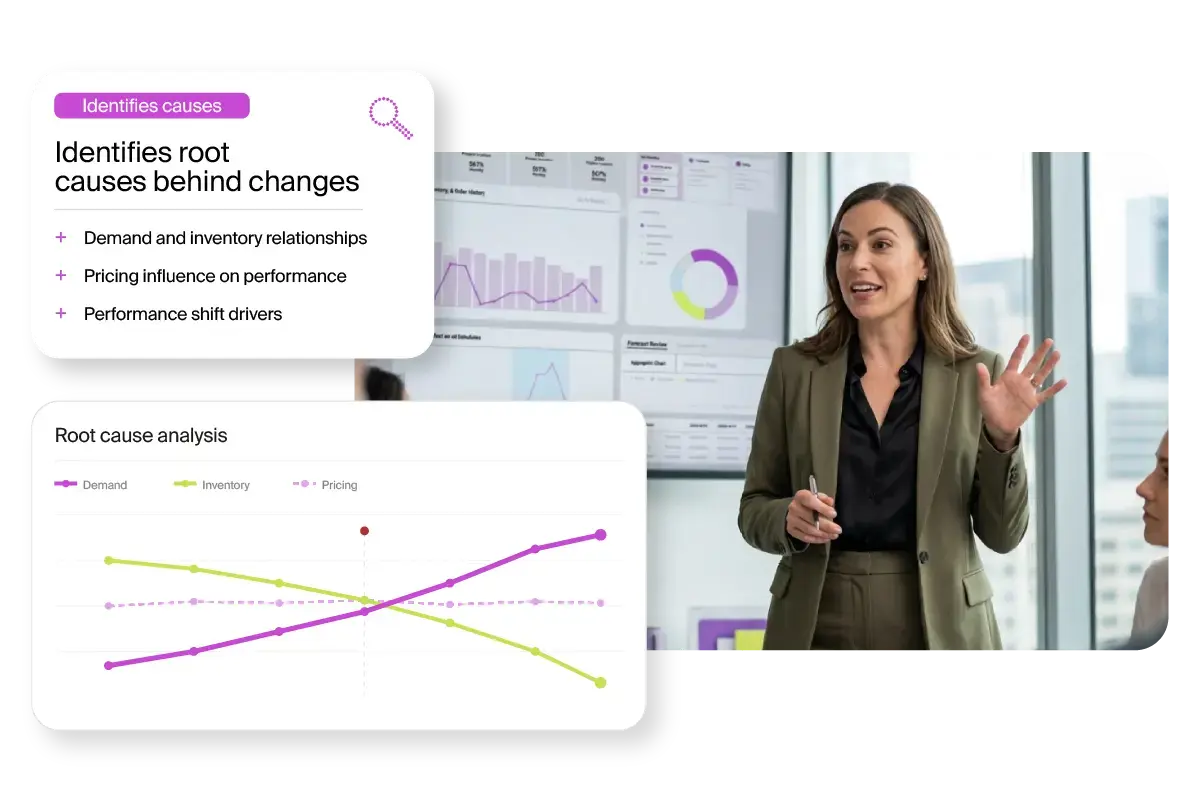
Retail teams often struggle to understand what is driving operational changes - how to interpret and explain the drivers behind alerts and performance changes. Most systems stop at detection, leaving teams to manually investigate what is driving performance changes across demand, inventory and pricing.
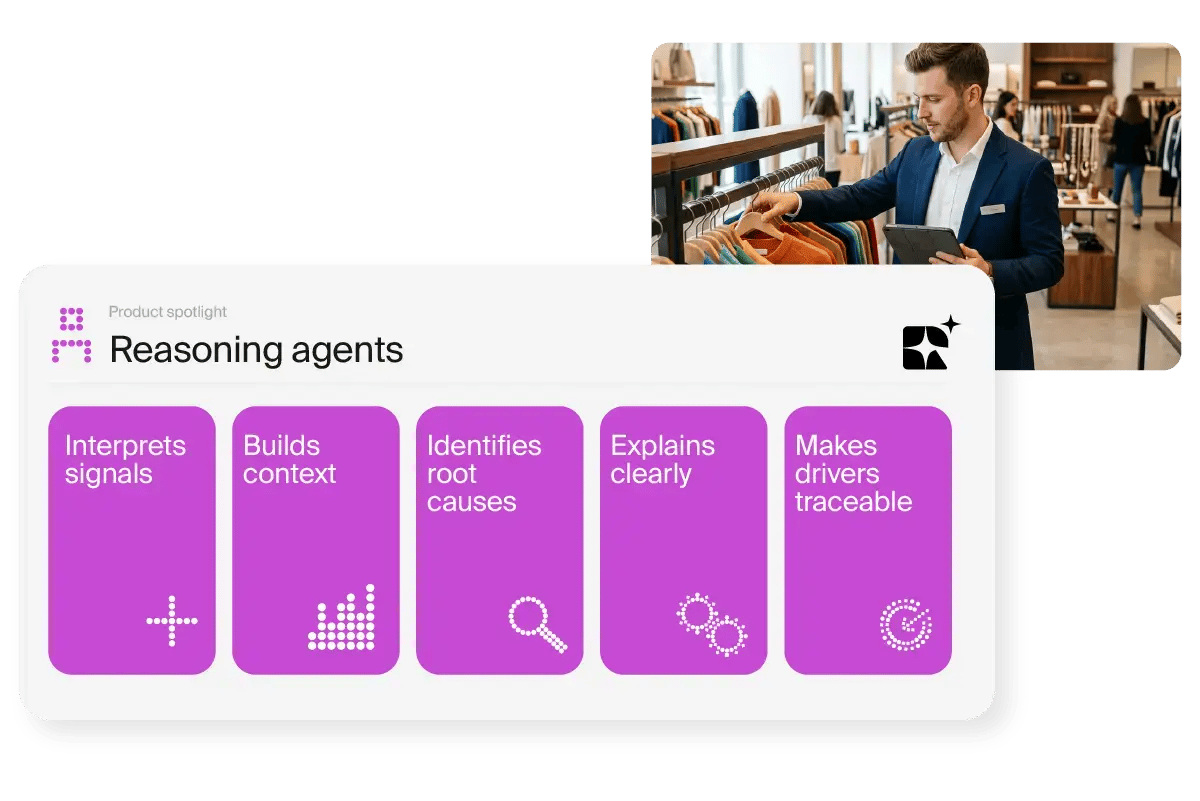
Reasoning agents help close that gap by interpreting signals in context and delivering clear explanations of what is happening and why.
What retailers gain with reasoning agents:
Reasoning agents turn fragmented alerts into shared understanding across the business.
Demand signals → Root-cause analysis → Explanation → Recommendation
Reasoning agents continuously interpret retail signals, transforming raw alerts into structured explanations that teams can understand immediately.
Most retail tools detect change. Reasoning agents explain it.
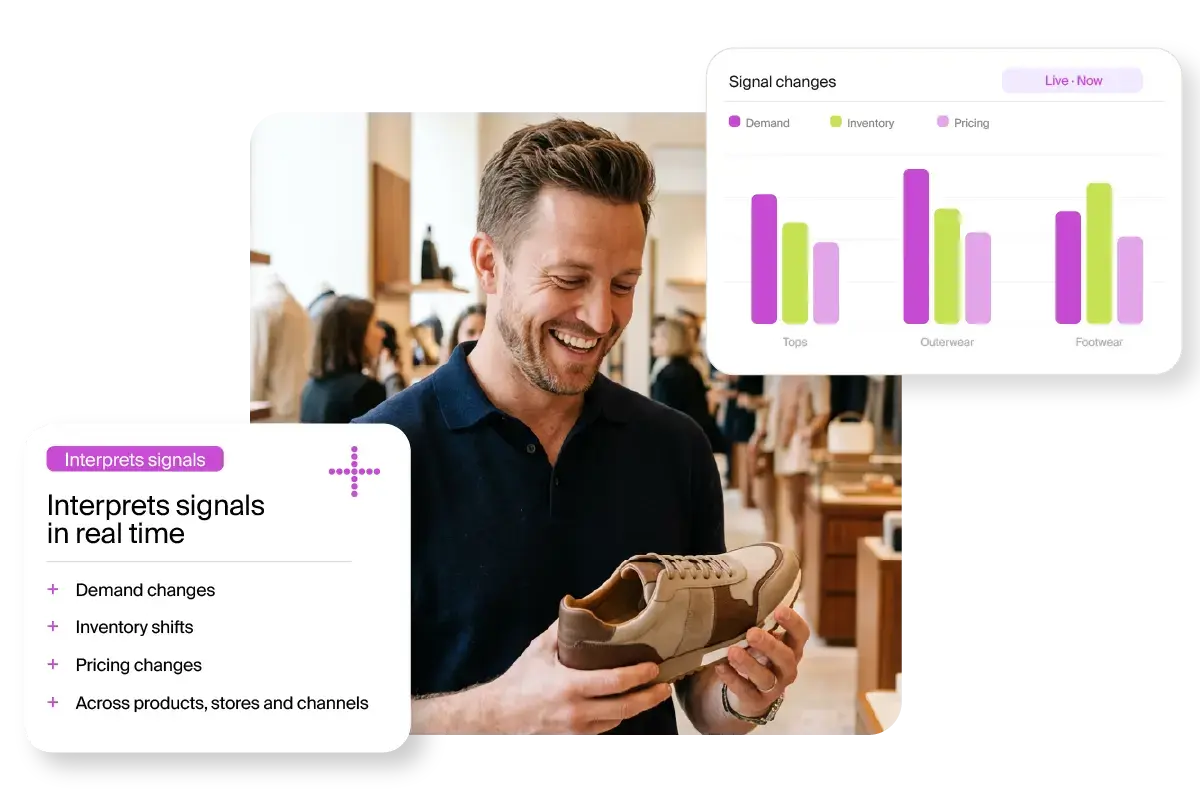
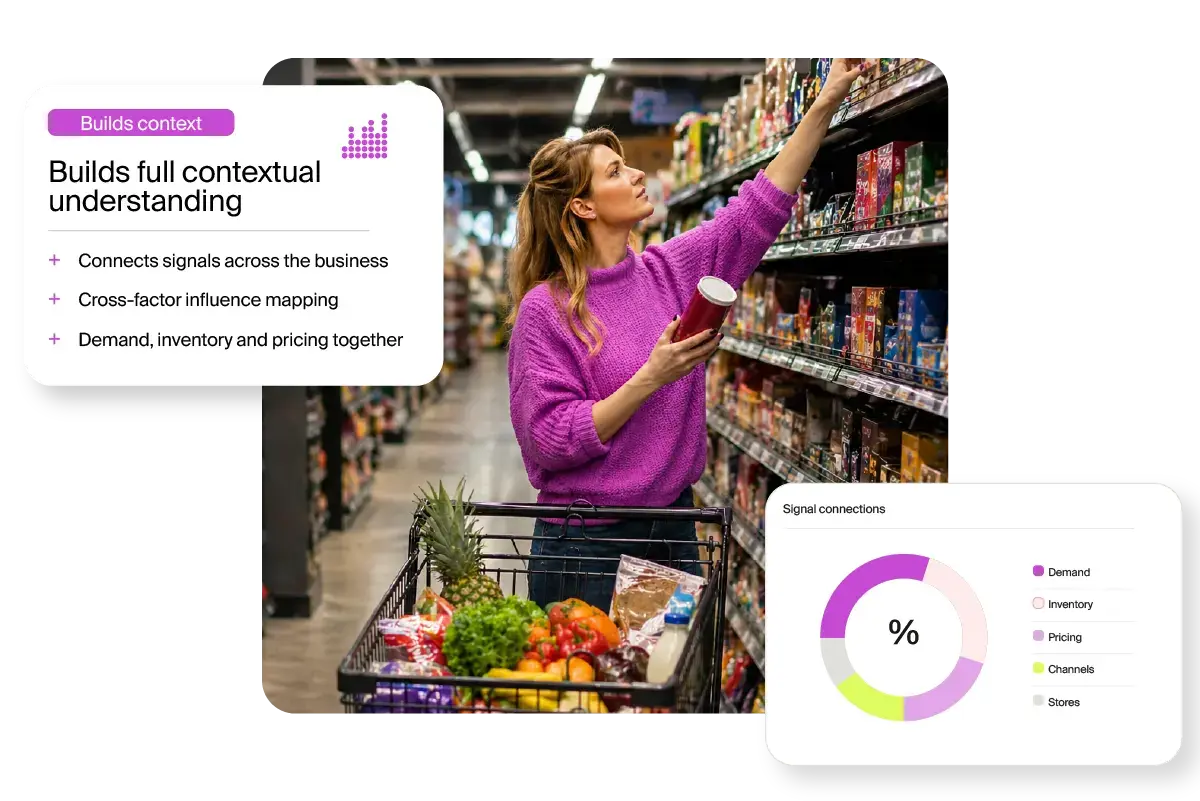
By connecting demand, inventory and pricing in real time, they help teams interpret signals in context, not isolation.
They deliver:
Reasoning agents support retail decision workflows, helping teams understand signals before taking action.
They continuously:
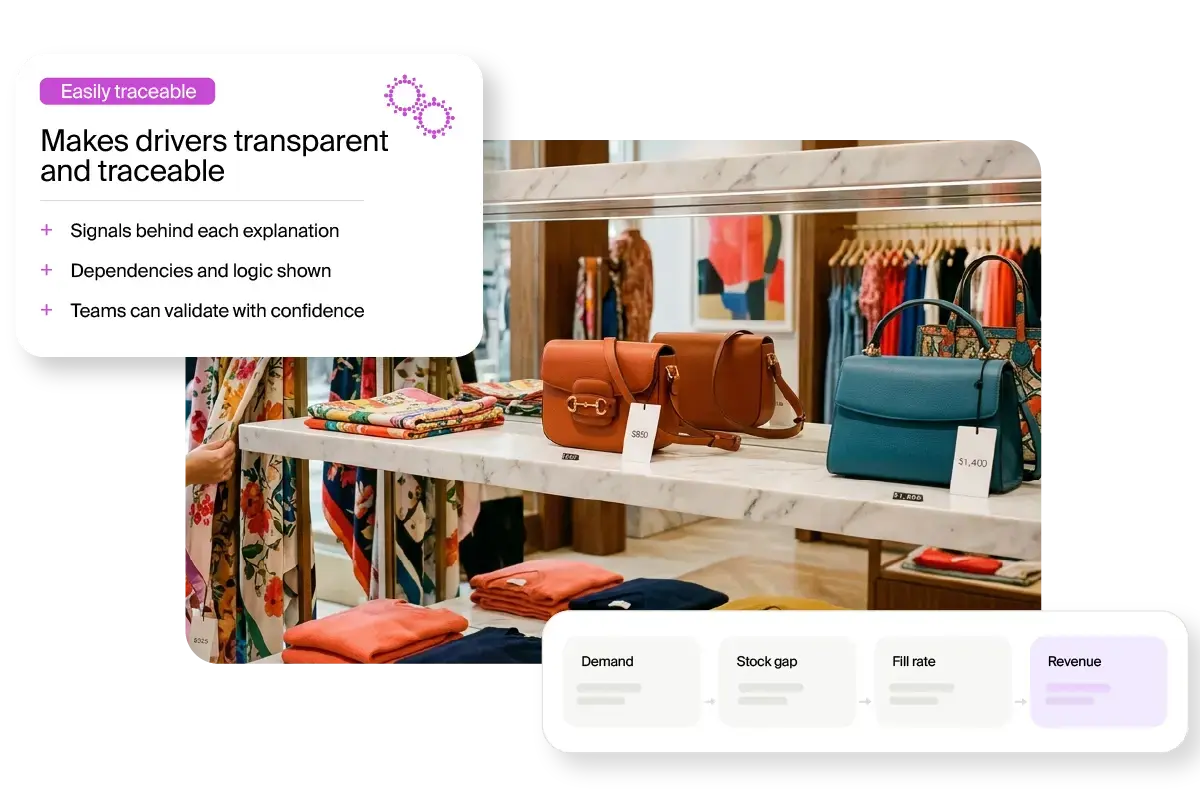
By connecting these insights, reasoning agents ensure decisions are based on understanding, not assumption.
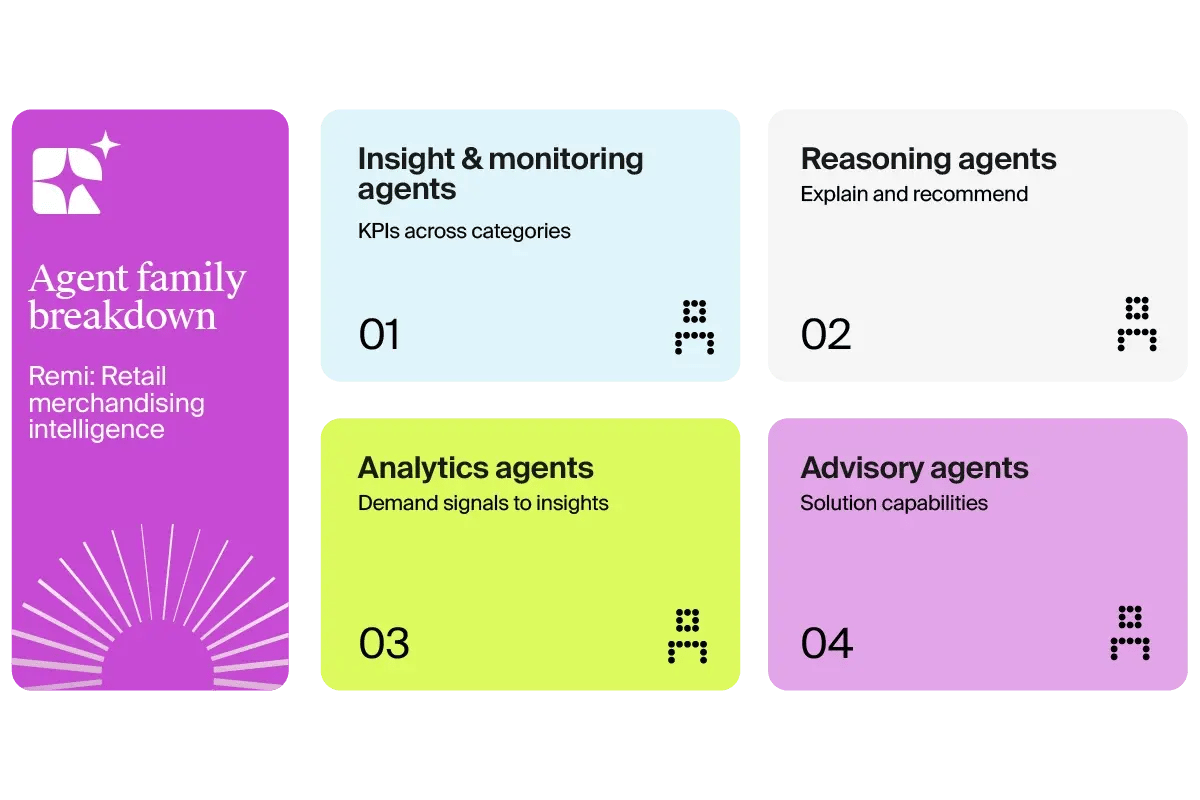
Reasoning agents sit at the core of decision intelligence, transforming raw retail signals into structured, contextual explanations. They interpret changes in demand, inventory and pricing in real time, connecting related operational signals across the business.
By building context and identifying root causes, reasoning agents turn alerts into clear explanations of what is happening and why. This ensures teams don’t just react to changes—they understand the drivers behind them.
The result is faster alignment, reduced manual analysis and more confident decisions grounded in transparent explanations supporting decision workflows.
Retail teams often struggle when alerts lack clear explanations.
Reasoning agents solve this by turning every alert into a structured explanation that teams can trust, validate and act on immediately. By connecting demand, inventory and pricing in real time, they replace manual investigation with clear, contextual root-cause explanations at scale—enabling faster, more confident retail decisions.