
.svg)
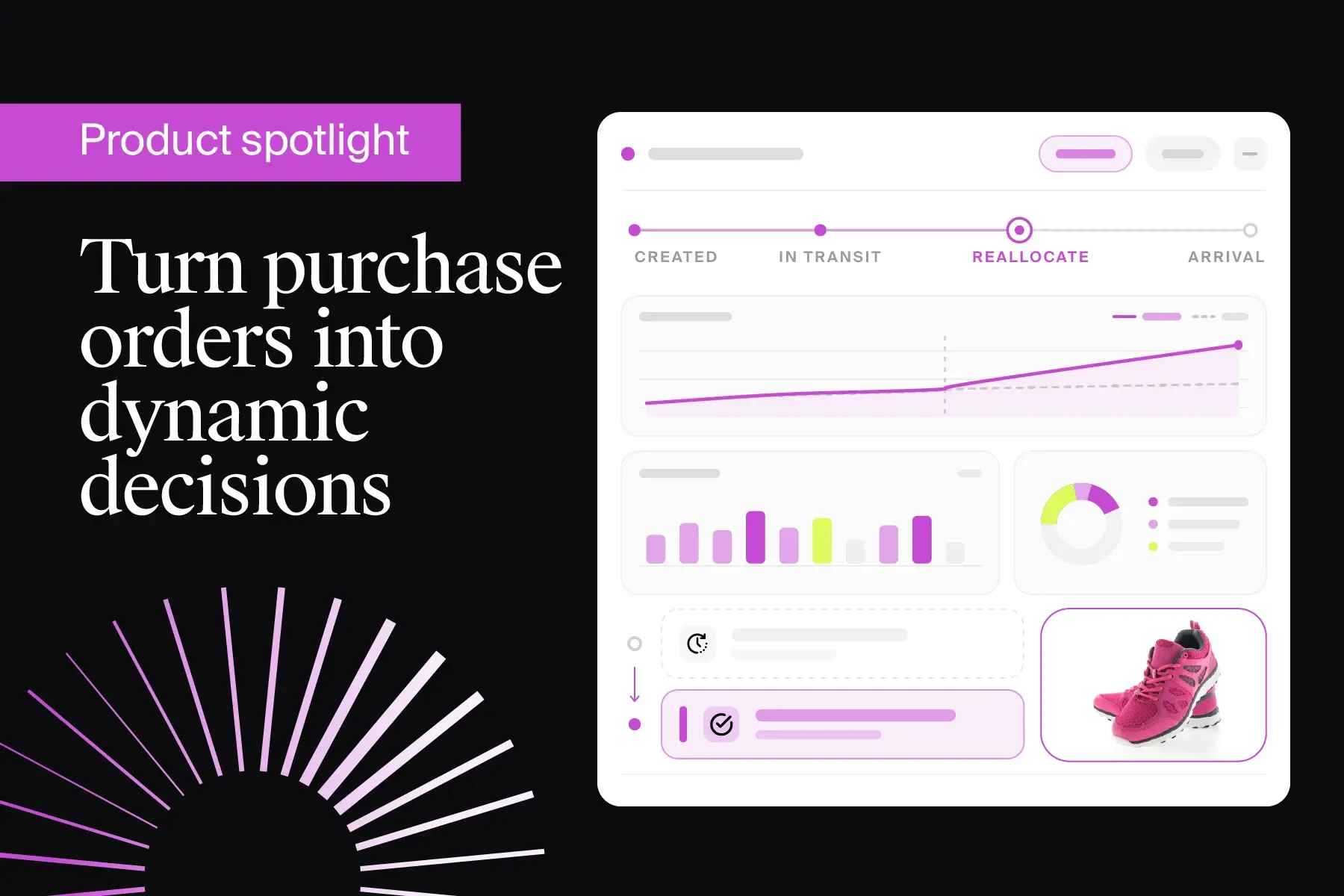
A lot can change after a purchase order is created. Demand can shift. A product can take off in one region and slow down in another. A promotion can change buying patterns overnight. By the time inventory is ready to ship or arrives, the original plan may no longer reflect what customers need.
The challenge is that many retailers still treat purchase orders as final once they are placed. But not every decision about where that inventory will go needs to be made at the same time the purchase order is created. When demand shifts, teams often have to react after inventory has already arrived, leading to extra transfers, excess stock in some locations and missed sales in others.
Purchase Order Reallocation by invent.ai gives retailers a way to adjust earlier. By connecting purchase order data with demand signals and inventory intelligence, invent.ai helps teams make better decisions about where inbound inventory should go as the arrival date gets closer.
Keep inbound inventory aligned with current demand
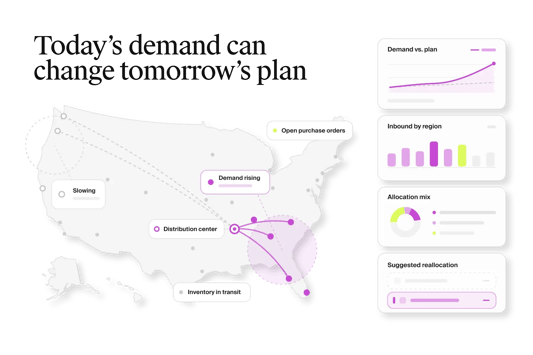 Purchase orders are created using the best information available at the time. But retail conditions evolve.
When a purchase order is placed months before inventory arrives, retailers may not need to finalize the exact destination split immediately. As the arrival date approaches, they have access to more current information about demand, inventory and network needs.
Invent.ai helps teams evaluate upcoming purchase orders against those changing conditions and identify where the inbound inventory may need to be split or redirected.
This gives retailers more flexibility to make the destination decision closer to arrival, when they have a clearer picture of where inventory will be needed.
Instead of manually comparing orders across spreadsheets, teams have a clearer view of which inbound inventory decisions need attention and where a change could make the biggest difference.
See how purchase orders connect across the network
A single purchase order rarely tells the complete story. The same product may appear across multiple orders, arrive at different times or be committed to different locations. Looking at each order separately can make it difficult to understand how inventory decisions connect.
Invent.ai evaluates related purchase orders together, including their arrival timing, demand and inventory positions, so planners can consider the broader inventory position when making adjustments.
That broader view can help teams determine whether an upcoming shipment should still follow its original destination plan or whether the inventory would be better directed elsewhere.
This gives teams a more coordinated way to manage inbound inventory instead of making isolated changes.
Make decisions later, with better information
Retailers don't always need to make the final destination decision when a purchase order is created. Instead, inventory can be assigned to a virtual destination, or a flexible placeholder that keeps the order open to change as it gets closer to arrival. As new information comes in, demand may strengthen in one region, inventory may tighten in another or network priorities may shift. Invent.ai uses the latest signals to break the virtual destination down into the right distribution centers, helping inventory arrive where it is needed most.
This is sometimes referred to as “late binding,” or keeping a decision open until there is enough information to make a better one.
For example, a retailer may have 10,000 units coming from a supplier without needing to determine the final split between distribution centers months in advance. As the shipment gets closer, the retailer can use more recent demand and inventory signals to determine where those units should go.
If a destination has already been determined, changing conditions may create an opportunity to redirect the shipment before it reaches the network, rather than waiting for the inventory to arrive and then moving it through the network.
The specific workflow depends on how each retailer's supply chain is structured, but the principle is the same: use the latest available information to make inbound inventory decisions before those decisions become harder or more expensive to change.
Combine AI recommendations with retail expertise
AI can analyze complex inventory scenarios quickly, but retail teams bring the context behind every decision.
Invent.ai combines specialized AI agents with planner expertise to identify opportunities, explain recommendations and support decisions while keeping teams in control.
Through Remi, the supervisory AI agent within invent.ai's AI-decisioning platform, retailers can connect insights and monitoring, reasoning and analytics capabilities in one workflow.
Teams can understand what is changing, why an inbound inventory decision may need to change and determine the best action based on their business priorities.
Make every purchase order more adaptable with invent.ai
A purchase order should not become disconnected from the business the moment it is created.
Invent.ai helps retailers keep inbound inventory decisions flexible as conditions change, using the most recent information available before products arrive.
By identifying opportunities earlier, retailers can improve inventory placement, reduce unnecessary downstream movement and respond to changing demand before inventory reaches the network.
With invent.ai, retailers can make changes to inbound inventory while there’s still time to act, whether that means adjusting the split across destinations or redirecting a shipment when priorities change.
That means fewer decisions locked in too early and more flexibility to get inventory where it needs to go.
Discover how AI-powered decisioning helps retailers adapt inventory decisions as demand changes. Get in touch.