When costs change, inventory decisions need to change too
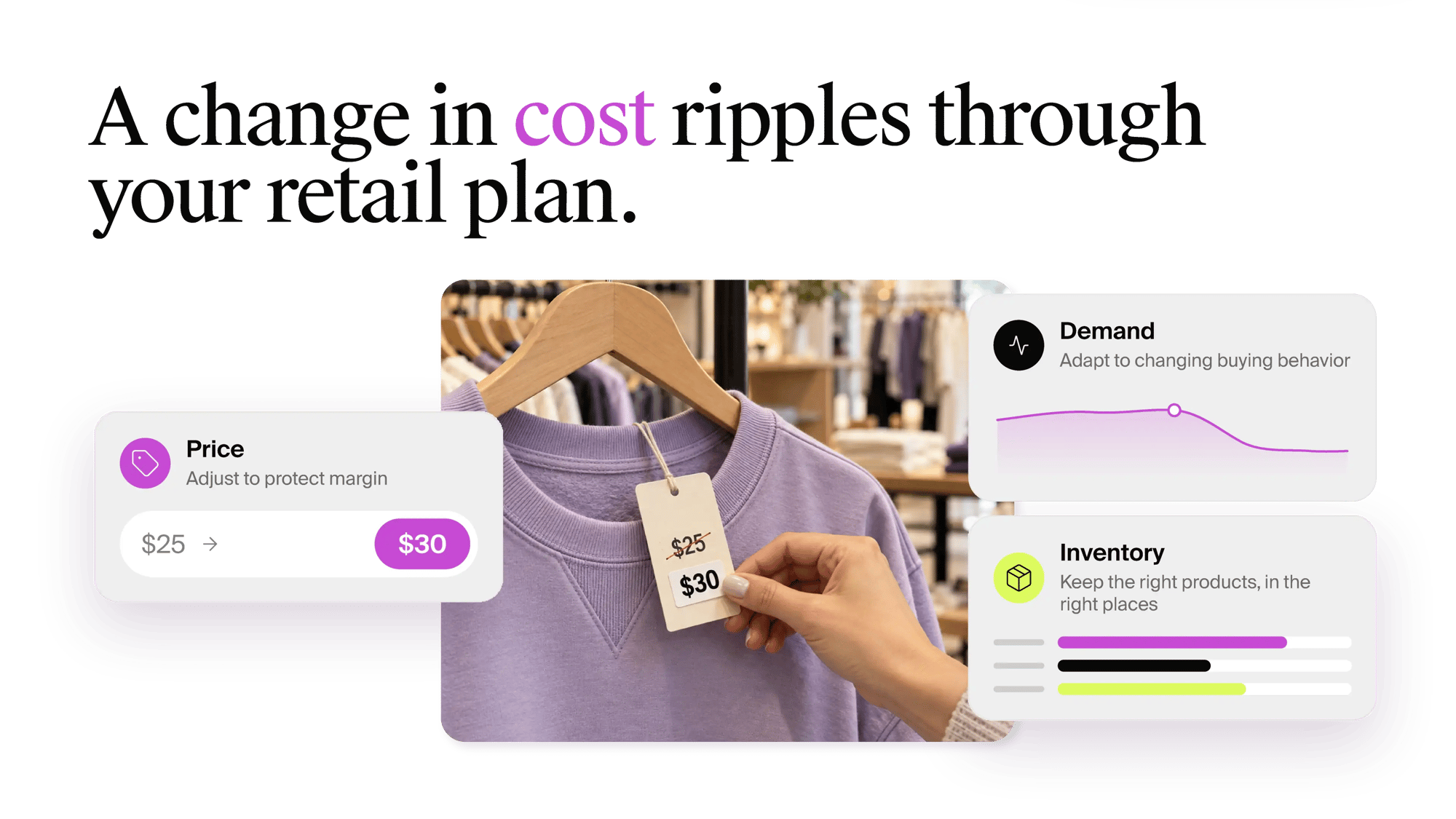
Retailers can make an inventory plan based on one set of assumptions and find themselves working with very different economics months later. Tariffs can change, product costs can move and retail prices may need to adjust, all while inventory is already on order or in the network.
This guide explores how retailers can respond when tariffs and other cost conditions change, from understanding what those changes mean for demand to evaluating inventory exposure and identifying where there is still flexibility to act.
What you'll learn:
- How tariffs and cost changes can affect demand and inventory needs
- Why price changes can distort the demand signal behind a plan
- How cost, demand, lead time and service levels shape inventory decisions
- Where cost exposure sits across your inventory
- How to distinguish inventory already committed and what can still change
- Why demand, inventory and pricing decisions need to stay connected as conditions change
- How planners can evaluate recommendations and decide what to do next t
Ready to respond when cost conditions change? Explore how AI decisioning can help your organization understand cost exposure, evaluate the inventory implications and identify where there is still room to act.
Download Planning for changing cost conditions white paper