
.svg)
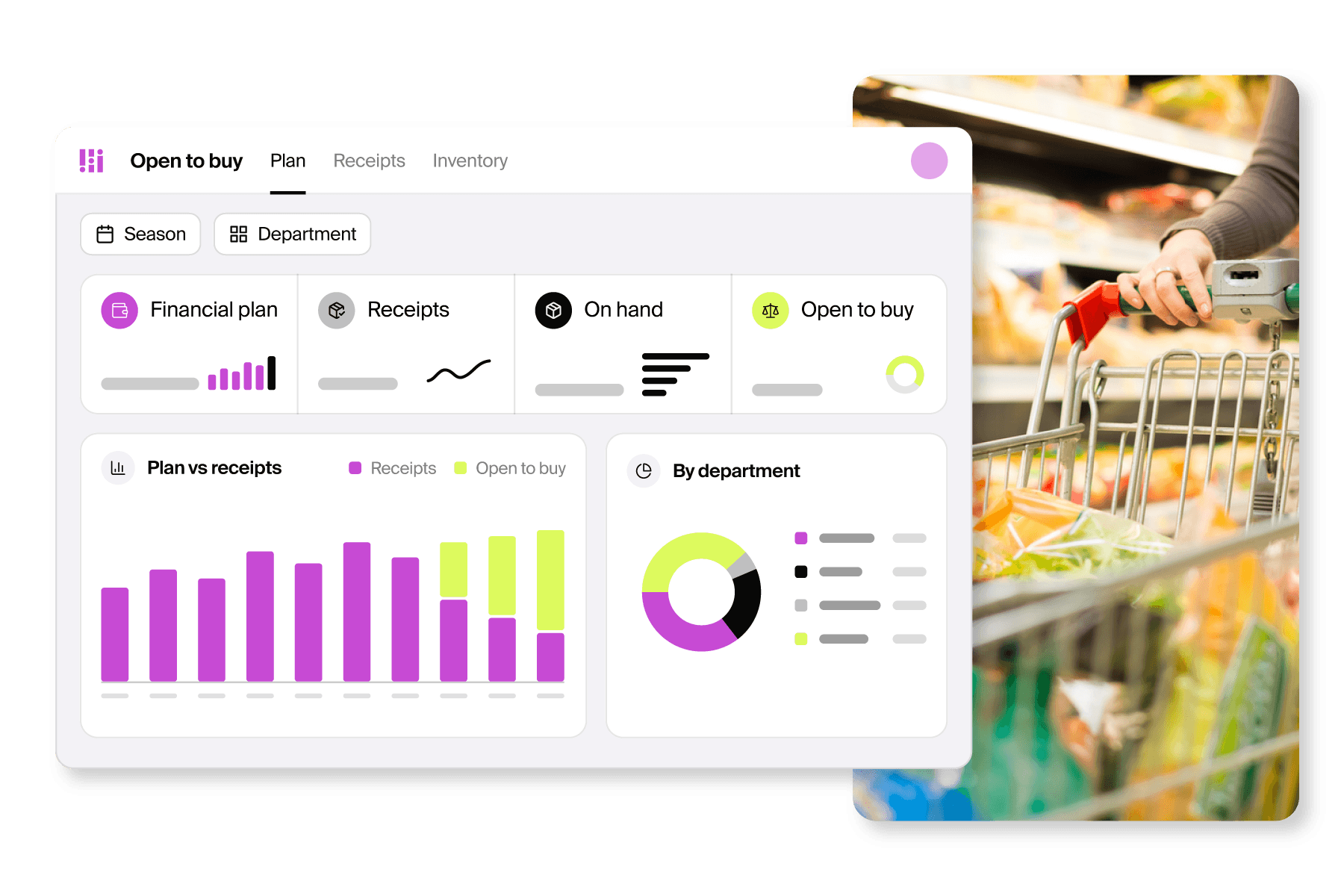
Open-to-buy (OTB) planning gives retail teams a way to connect merchandise budgets with what is actually happening across inventory. When demand shifts, receipts change, stock builds or sales slow, OTB helps buyers understand how much purchasing capacity remains and where it should be used.
That connection matters when retailers need to protect margin and cash while keeping the right products available. A financial plan may set the direction, but inventory decisions determine whether that plan holds up in practice. Effective OTB planning brings the two together through connected planning workflows, giving merchants a structured way to adjust buying decisions as conditions change.
What is open-to-buy planning?
OTB planning determines how much inventory a retailer can still purchase within a defined period while staying aligned with planned sales, inventory levels and financial targets.
The OTB formula typically considers beginning-of-month inventory, planned sales, planned markdowns, planned receipts and end-of-month inventory targets. The result gives buyers a view of remaining buying capacity and helps them decide when to commit additional spend.
OTB is more than a budget check. It is a control mechanism that helps retailers manage the balance between inventory investment and demand.
Buying too aggressively can create excess stock, slow inventory turnover and increase markdown exposure. Buying too conservatively can contribute to stockouts, missed sales and lower availability. OTB planning keeps those tradeoffs visible as plans evolve.
How open-to-buy planning connects financial goals to inventory
Financial plans establish targets for sales, inventory and gross margin. OTB planning translates those targets into decisions about what to buy, when to buy it and how much inventory to commit.
That connection starts with beginning-of-month inventory and end-of-month inventory targets. Planned sales and markdowns determine how much stock is expected to leave the business, while the ending inventory target establishes how much should remain. Planned receipts then help determine how much additional inventory is required.
This gives merchants a practical way to manage optimal stock levels without losing sight of financial constraints.
For example, if inventory starts a period above plan, the available buying budget may need to decrease. If demand accelerates and inventory falls below target, additional buying capacity may be needed. OTB planning provides the framework for making those adjustments before the gap becomes a larger inventory or margin problem.
Open-to-buy planning vs. demand forecasting
Open-to-buy planning and demand forecasting work together, but they answer different questions.
- Demand forecasting asks: What is likely to happen?
- OTB planning asks: Given what we expect to happen, how much inventory can we commit to?
Sales forecasting provides the demand signal. OTB planning uses that signal alongside inventory targets, commitments, markdown assumptions and financial constraints to establish buying capacity.
When a forecast changes, the OTB plan should change with it. A revised demand outlook may require different receipt timing, deeper or smaller buys or a shift in spending across categories.
Connecting these workflows helps prevent a common planning problem: continuing to buy against an outdated forecast simply because the original budget is still in place.
Retailers can connect forecast updates to buying decisions througAI-supported planning workflows, helping teams evaluate changes without treating forecasting and OTB as separate exercises.
Why cash flow management depends on OTB planning
Inventory represents cash committed before that inventory generates sales. That makes buying decisions an important part of cash flow management.
Excess inventory ties up working capital and can eventually require markdowns to clear. Insufficient inventory can limit sales and force retailers into reactive replenishment decisions. OTB planning helps balance those risks by keeping purchasing capacity connected to expected demand and inventory needs.
This makes OTB an important part of working capital optimization. Rather than treating the buying budget as a fixed amount, retailers can continually reassess where available spend will have the greatest value based on current inventory and demand.
Open-to-buy planning for fashion and seasonal retail
 Timing becomes especially important in fashion and other seasonal categories. A product that arrives too early can sit through low-demand periods. A product that arrives too late can miss the selling window altogether.
OTB planning helps merchants account for those timing considerations alongside planned sales and inventory targets. Promotional activities, seasonal peaks and planned markdowns can all influence how much inventory a category needs and when that inventory should arrive.
The goal is not simply to maximize inventory availability. It is to have the right amount of inventory available at the right point in the selling cycle while protecting full-price sell-through and margin.
The role of inventory turnover in OTB planning
Inventory turnover provides another way to evaluate whether buying decisions are keeping pace with demand.
Slow turns can indicate that receipts are running ahead of sales, inventory is concentrated in the wrong products or demand assumptions have changed. Faster turns can signal stronger demand, but they can also indicate that inventory needs to be replenished before availability suffers.
OTB planning gives merchants a mechanism for responding to these signals. Rather than waiting until excess inventory requires markdowns or stockouts affect sales, teams can adjust future buying decisions based on how inventory is actually moving.
Open-to-buy planning at the category and department level
A total buying budget can hide significant differences between categories. One department may be selling faster than expected while another is accumulating excess stock.
Category-level OTB planning gives merchants a more detailed view of where buying capacity is available and where spending should be constrained. Teams can compare planned sales, inventory, receipts and performance across departments and adjust their six-month buying plan as conditions change.
Shorter review cycles are particularly useful during volatile periods. A six-month plan can provide strategic structure while weekly or monthly reviews allow merchants to respond to changes in demand, inventory and promotional activity.
How AI agents can improve open-to-buy planning
Traditional OTB planning often depends on spreadsheets, manual updates and repeated scenario analysis. When demand or inventory changes, planners may need to rebuild multiple versions of the plan before deciding what to do next.
AI-supported planning can help automate that analysis. Instead of manually testing every scenario, retailers can evaluate potential changes to receipts, demand, promotions and inventory constraints within the same workflow.
AI agents can also help surface exceptions. If actual inventory starts moving away from plan, a system can identify the affected categories, assess the relevant constraints and bring the issue forward for review.
The role of AI is not to remove the buyer from the decision. It is to make the analysis behind the decision faster and easier to act on. With planning capabilities, teams can connect forecast changes, inventory conditions and buying decisions in a shared workflow.
What retailers need from an OTB system
An effective OTB system should connect financial plans with the inventory information merchants use every day.
That includes:
- Current and projected inventory
- Planned sales and markdowns
- Open commitments and future receipts
- Inventory targets and safety stock
- Category and department budgets
- Forecast changes
- Allocation and replenishment requirements
- Scenario planning and potential tradeoffs
The system should also make it easy to move between strategic and operational views. A merchandise leader may need to review the six-month buying plan, while a buyer may need to understand why a category's available spend changed this week.
How better OTB planning can reduce markdown exposure
Markdowns often become necessary when inventory gets too far ahead of demand. Better OTB planning can reduce that exposure by bringing demand, inventory and future buying decisions into the same planning process.
When sales forecasts weaken, buyers can adjust future receipts before excess stock accumulates. When demand strengthens, available buying capacity can be redirected toward products with stronger selling potential.
This does not eliminate markdowns. It gives merchants more opportunities to identify inventory risk earlier and respond while there is still time to change the outcome.
Align buying budgets with sales forecasts
 Sales forecasting establishes expected demand. OTB planning determines how much inventory investment is appropriate against that expectation.
A rolling OTB process allows retailers to update buying capacity as forecasts change rather than relying on a static budget established months earlier. That creates a stronger connection between the original merchandise financial plan and the decisions happening throughout the season.
For retailers managing complex assortments, this connection becomes increasingly important. Changes at the category or SKU level can quickly affect inventory requirements, buying capacity and cash commitments across the business.
Improve open-to-buy planning with Invent.ai
Open-to-buy planning is most useful when financial plans can translate into timely inventory decisions. Invent.ai connects demand forecasting, inventory planning and merchandise decisions in a single planning workflow, helping retailers evaluate what is changing and determine what action to take next.
AI agents can help identify exceptions, assess scenarios and bring relevant decisions forward while merchants remain in control of the final action. Instead of managing OTB as a separate financial exercise, teams can connect buying decisions to actual inventory and demand conditions. Connect with a retail AI expert to get started.