
.svg)
Fulfillment has become one of retail's most complex operational decisions. An order can potentially be fulfilled from multiple locations, using inventory that may already be needed elsewhere. Customer expectations continue to rise, while retailers are balancing availability, delivery commitments, fulfillment costs and future demand.
The challenge isn't a lack of information. It's knowing which signals matter, how they interact and what to do next.
By bringing omni-channel fulfillment into a connected environment, the invent.ai AI-Decisioning Platform helps retailers evaluate the conditions around each decision and determine the action that best fits the situation.
Connecting the signals behind fulfillment
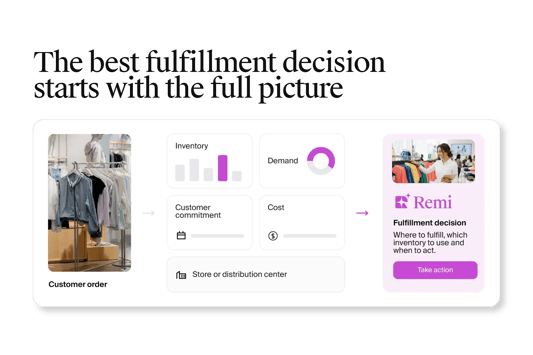
A fulfillment decision doesn't happen in isolation. The right action can depend on what's selling, what's available, what's expected to sell next, where inventory is positioned, what customers have been promised and what it will cost to fulfill an order from each possible location.
Invent.ai brings these signals together so AI can reason across the decision rather than optimizing one variable at a time. The platform can consider:
- Current inventory position
- Expected demand
- Customer orders and delivery commitments
- Store and distribution center (DC) inventory
- Fulfillment capacity
- Fulfillment and transportation costs
- Future inventory requirements
- Availability and potential lost sales
- Business priorities and constraints
With this context, AI can evaluate the available fulfillment options and determine which action makes the most sense.
Evaluating the fulfillment tradeoffs
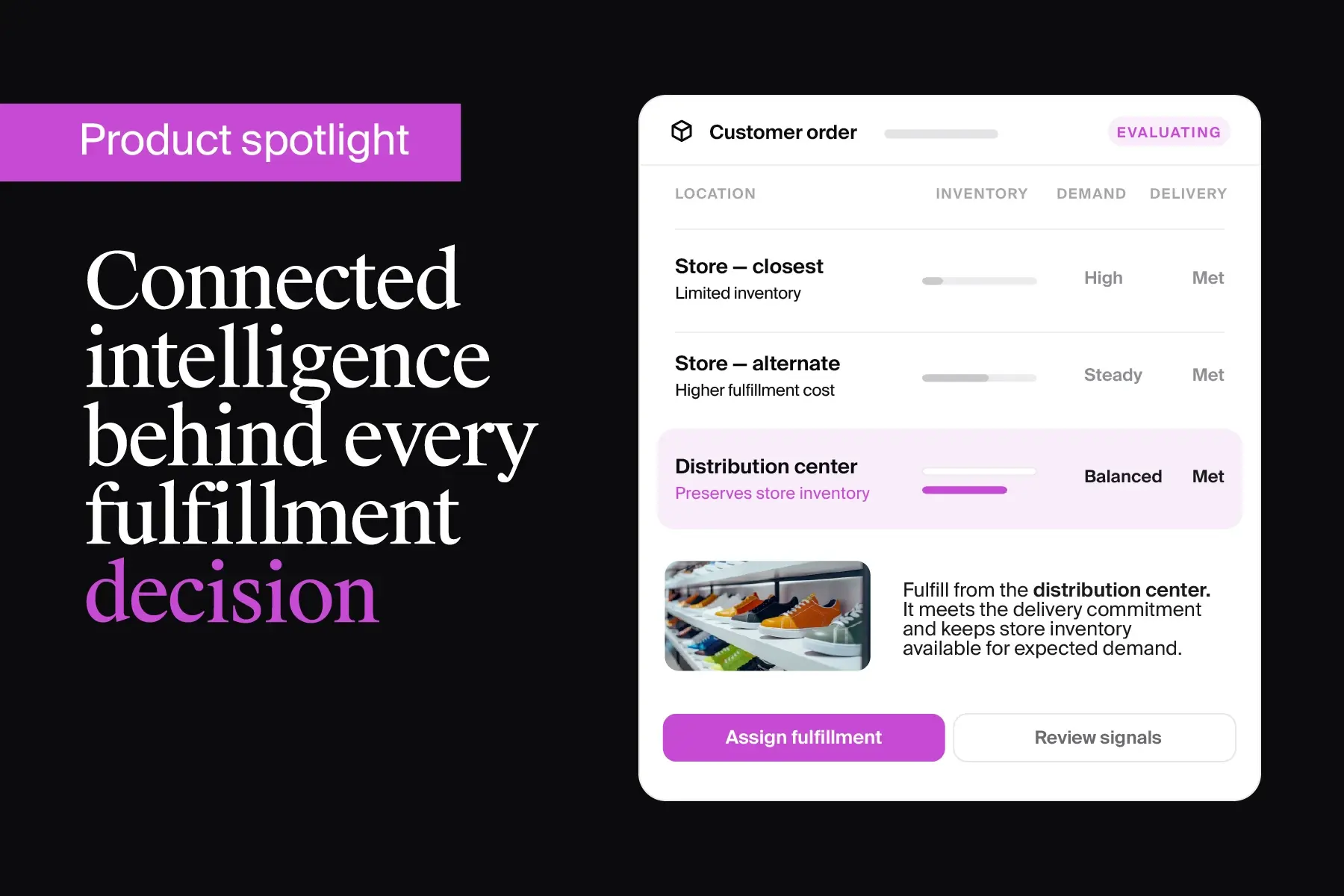
 Consider an order that can be fulfilled from three different locations: one is closest to the customer, but its inventory is limited and expected demand is high. Another has more inventory available, but fulfillment costs are higher. A third location can meet the customer's delivery commitment while preserving inventory in a market where demand is expected to increase.
A rule-based approach may default to the closest location or follow a predetermined fulfillment hierarchy.
AI can evaluate the broader context. It can weigh the different outcomes and recommend the fulfillment option that best aligns with the retailer's objectives.
This means retailers can make decisions around:
- Where to fulfill: Evaluate available inventory across the network and determine which location makes the most sense for the order.
- Which inventory to use: Consider current and future demand before consuming inventory that may be more valuable elsewhere.
- How to respond to changing conditions: Re-evaluate fulfillment decisions as inventory, demand, capacity and customer requirements change.
- Where to intervene: Surface fulfillment decisions that require attention instead of relying on teams to manually monitor every situation.
From fulfillment signals to action
The value of connected fulfillment intelligence isn't simply knowing what's happening. It's being able to act on it.
Invent.ai connects the signals behind a fulfillment situation with AI reasoning and recommended actions, helping teams move from signal to decision to action.
A fulfillment manager might want to know:
- Where are we most at risk of missing customer delivery commitments?
- Which fulfillment decisions are driving unnecessary costs?
- Where should we protect inventory based on expected demand?
- Which locations have inventory that could better support current demand?
- What fulfillment decisions should we prioritize today?
Rather than piecing together the answer across separate systems, teams can use the intelligence within invent.ai to understand the situation and determine what to do next.
The recommendation isn't simply an output. Teams can review the underlying signals, understand the reasoning and see the expected implications of the decision.
That visibility is important as retailers operationalize AI. Measure, review and approval remain part of the process, allowing teams to build trust in AI through actual decisions and measurable results.
Bringing fulfillment intelligence to teams with Remi AI
At the center of the invent.ai AI-decisioning platform is Remi, our AI orchestration agent for retail planning and execution. Remi connects the signals, reasoning and actions behind retail decisions, helping teams move from identifying an issue to understanding what is driving it and determining what to do next.
For fulfillment, teams can start with the business question rather than figuring out which dashboard or data set they need.
For example: “Which orders are at risk of missing their delivery commitment today?”
From there, they can explore:
- Which locations are causing the issue?
- Do we have inventory elsewhere?
- What are the fulfillment cost tradeoffs?
- Which orders should we address first?
Remi brings the relevant retail signals into the conversation and helps teams understand the reasoning behind the recommended action. The experience moves naturally from what is happening to why it is happening to what should happen next, bringing fulfillment intelligence closer to the decisions teams need to make every day.
How invent.ai turns fulfillment into a connected decision
Fulfillment is no longer just about finding inventory and getting an order out the door. Every decision has implications for customer experience, cost, inventory availability and what the network will need next.
Invent.ai brings those considerations together in one AI-decisioning environment, helping retailers understand the context behind each fulfillment situation, evaluate the tradeoffs and determine the best action to take.
With invent.ai, teams can move beyond static rules and isolated signals to make fulfillment decisions that account for what is happening across the network in the moment, and what is likely to happen next. Get in touch with us to see how invent.ai optimizes every fulfillment decision in real time.