
.svg)
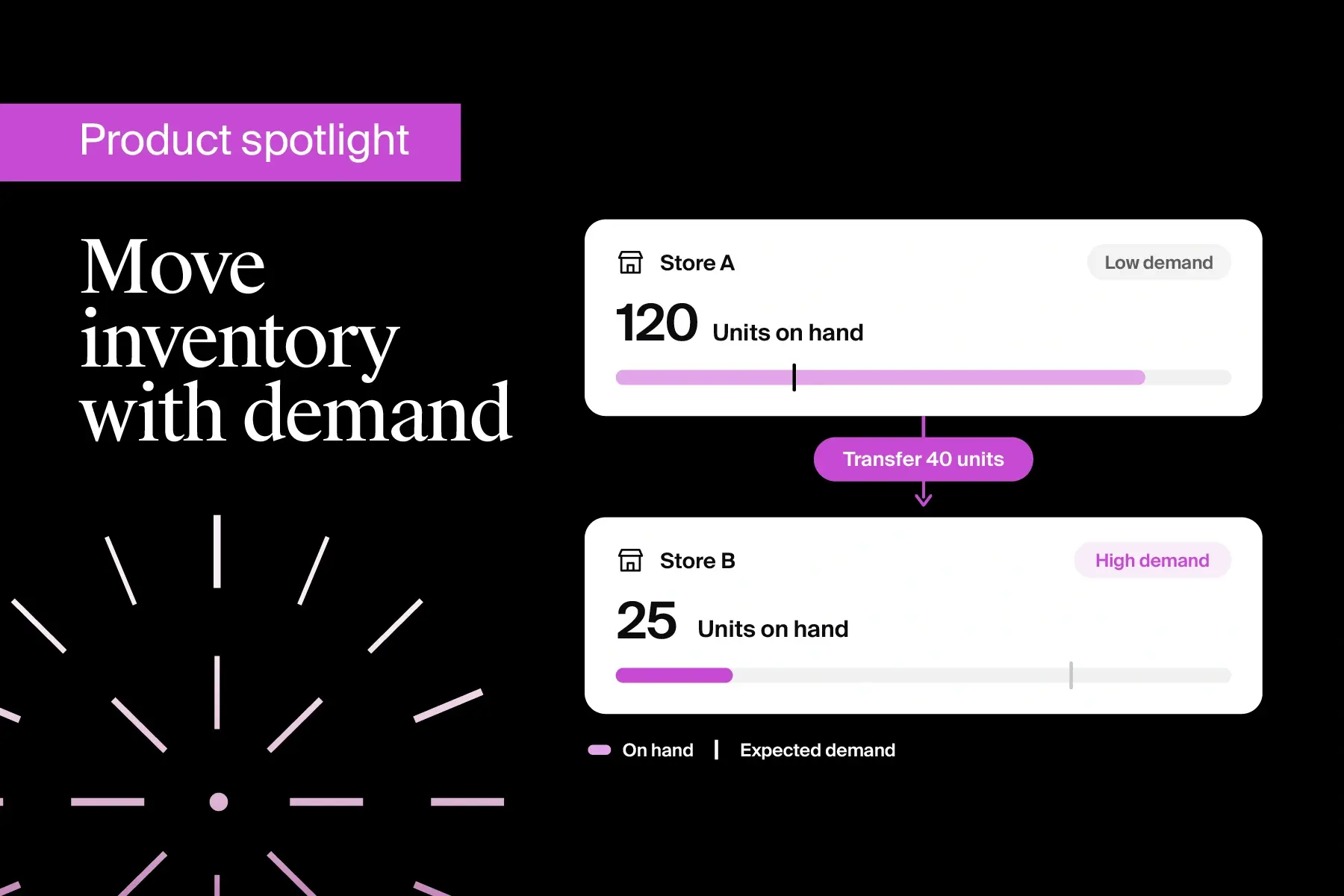
Retailers don’t always need more inventory to improve availability. Sometimes, the needed inventory is already in the network, but not in the right place. One store has more products than it needs. Another is selling faster than expected. A third may be heading toward out-of-stock. The inventory exists, but it isn’t where the customer is looking for it.
That creates a familiar retail problem: what should move, where should it go and when?
For retailers managing hundreds of stores and thousands of products, answering those questions manually can quickly become a full-time job. Teams may be comparing inventory reports, checking sales trends, looking at store capacity and trying to work out whether a transfer will actually solve the problem without creating another one somewhere else.
Transfers by invent.ai brings those decisions into one connected workflow. By combining demand, inventory and store-level signals, invent.ai helps retailers identify where inventory can be better positioned across the network and prioritize the transfers that best align with demand, availability and business constraints.
Find inventory that can move
Sometimes the issue isn't that a retailer doesn't have enough product. It’s that the product is sitting in the wrong location where it isn’t needed as much as somewhere else. A store may have several weeks of supply while another location is selling through its inventory much faster. Ordering more products might solve the immediate shortage, but it can also add inventory to a network that already has units available elsewhere.
A transfer may be a better answer. By moving products to locations where demand is stronger, retailers can make better use of inventory they already own.
The challenge is finding those opportunities at scale and understanding whether a transfer actually makes sense.
Invent.ai looks across inventory positions and demand patterns to help teams find products that may be better used somewhere else. Instead of relying on a simple "high versus low inventory" comparison, planners can evaluate potential moves in the context of current and expected demand across the network.
Put inventory where it’s needed
Not every surplus is transferable, and not every inventory gap calls for a transfer. A product sitting in a store may be needed there later. A location with low inventory may not have enough demand to justify a move. A transfer may also need to account for timing, inventory levels and other operational considerations.
That's where having more context matters. Invent.ai brings together inventory and demand signals to surface potential transfer opportunities and help planners understand the conditions behind them.
Teams can identify where inventory is available, where demand is building and where a move could improve product availability.
The result is a more focused transfer process. Instead of searching through every store and product combination, planners can spend their time reviewing the opportunities that actually warrant attention.
Balance the move across the network
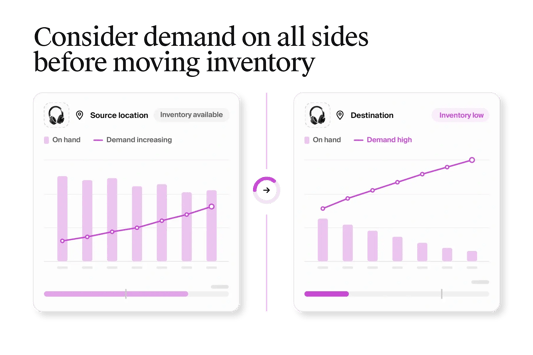 A transfer can solve one problem while creating another if the source location isn't considered. Moving inventory out of a store with excess product makes sense on paper. But if demand is about to increase there, that same inventory may soon be needed. The destination also needs to have enough demand to justify receiving the product.
Invent.ai helps planners evaluate both sides of the transfer by looking at inventory and demand across locations. This gives teams more context around each potential move and helps them avoid simply shifting an inventory problem from one store to another.
The goal isn’t simply to move inventory from a high-stock location to a low-stock location. It’s to understand where that inventory can do the most good across the network. Planners can look at the broader network and determine where inventory can be positioned to support availability without creating unnecessary gaps elsewhere.
Keep transfer decisions aligned with demand
Retail demand doesn't stay still. A product can start selling faster than expected in one market, slow down in another or see a sudden change in demand after a promotion. Seasonal patterns can also create very different inventory needs across stores.
That means a transfer decision needs to consider more than where inventory is available today. Planners also need to understand where demand is heading and whether the inventory will still be needed at the source location.
Invent.ai connects demand and inventory signals to help planners evaluate potential transfers in the context of changing conditions. This can help teams spot opportunities to reposition inventory before an availability problem develops, rather than waiting until a store is already out of stock.
As demand changes, retailers can continue reassessing where inventory is sitting and whether moving it could better support customers.
Give planners the context to act
AI can identify a potential transfer, but planners still need to understand why it makes sense. Invent.ai brings the underlying inventory and demand signals into the decision-making process so teams can evaluate potential moves with the right context. Planners can use their knowledge of stores, customers, promotions and business priorities alongside AI-generated recommendations.
Through Remi, the supervisory AI agent within invent.ai's AI-decisioning platform, retailers can connect insight, analytics, reasoning and advisory capabilities to move from identifying an inventory imbalance to deciding what to do about it.
The goal isn't to take the planner out of the process. It's to give them a clearer view of the opportunities worth considering.
Make better use of the inventory already available
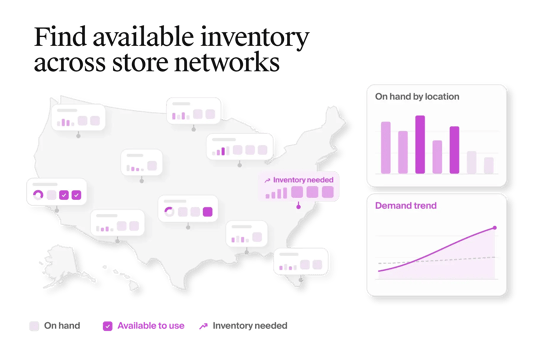 Transfer optimization helps retailers make better use of what they already have by identifying where inventory can move to support demand. That can help reduce unnecessary inventory buildup in some locations while improving availability in others.
For teams managing large store networks, that means less time spent manually comparing inventory positions and more time focused on the transfers that can make a difference.
Boyner, a major department store group with hundreds of brands and multiple retail concepts, is a good example. The retailer was already making transfer decisions, but the process often took days. With invent.ai, transfer decisions are made in under an hour, helping the team respond faster and make more accurate store-to-store transfers. The improvements helped reduce broken assortments and markdowns, while Boyner saw a 4.8% increase in sales within four months of implementing transfer optimization.
Turn inventory movement into a continuous decision with invent.ai
The right inventory placement can change as quickly as demand does. What works at the beginning of a season may not work a few weeks later. A store that once had excess inventory may suddenly need more. Another location may continue carrying products that are selling slowly while demand is picking up somewhere else.
Invent.ai helps retailers continuously connect those signals so transfer decisions can keep pace with the network.
Rather than treating transfers as a one-time fix, retailers can make them part of an ongoing approach to inventory management by regularly repositioning products as demand changes.
Because inventory isn’t just about how much you have. It’s about where it is, where demand is moving and whether it’s positioned to meet that demand.
Learn how invent.ai helps retailers identify where inventory should move, when to move it and take action to drive better business results.