
.svg)

The role of the merchandising team has expanded dramatically. Teams are expected to manage broader assortments, faster cycles and more localized execution while operating with fewer resources and tighter timelines. Yet many merchandising organizations still rely on manual workflows and static planning methods that were not designed for today’s retail environment.
Instead of focusing on merchandising strategy, teams spend a significant share of their time managing spreadsheets, reconciling data and reacting to issues after they surface. Industry research from BCG shows that retailers spend close to 40% of their week on tasks that can be automated. That time loss limits focus on growth initiatives and weakens decision quality across retail merchandising.
Where merchandising productivity is quietly lost
Manual work shows up across nearly every merchandising function. Category management requires constant updates that slow decision cycles. Inventory management depends on repetitive monitoring and adjustments that pull teams into daily firefighting. Execution details like planograms, product displays and promotional displays are often updated too late to fully influence results.
Over time these inefficiencies compound. Sales performance suffers when planning becomes reactive. Merchandising execution shifts from intentional to corrective. Even strong store layout and visual merchandising concepts lose effectiveness when decisions lag behind demand.
Static planning models cannot keep up with rapid changes in customer behavior or market conditions. This is where AI-driven decisioning changes how merchandising teams operate.
How AI agents change merchandising workflows
AI agents do more than analyze data. They continuously make and refine decisions across planning and execution, allowing merchandising teams to move from manual coordination to strategic oversight.
For product assortment and category management, AI evaluates every SKU against demand patterns, financial constraints and execution realities. Instead of relying solely on historical performance, teams gain forward-looking recommendations that adjust as conditions change. This supports a more responsive and consistent merchandising strategy.
Rather than replacing expertise, AI removes friction from the decision process so teams can focus on direction and priorities.
Assortment and space decisions guided by real demand
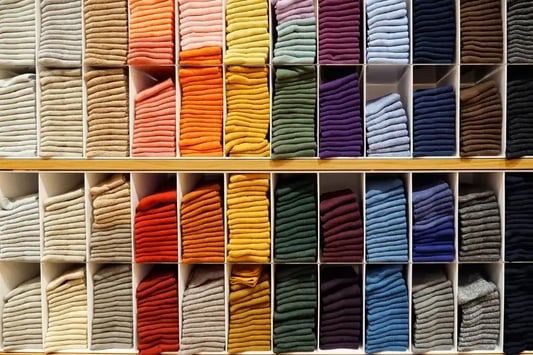 Traditional assortment planning depends heavily on hindsight. AI-powered assortment planning introduces a different model, using continuous demand signals to guide decisions before trends fully emerge. By analyzing customer behavior and external signals in real time, AI helps merchandising teams adjust product assortment earlier in the cycle. This improves relevance while reducing overreaction later in the season.
AI also supports visual merchandising by optimizing product displays and store layout based on how customers actually shop. Teams can simulate and refine planograms digitally, improving execution consistency across locations and strengthening the overall customer experience.
Demand forecasting that supports daily decisions
Accurate demand forecasting remains one of the most time-intensive responsibilities for merchandising teams. Machine learning transforms forecasting into a continuous process rather than a periodic exercise.
AI processes signals from across the business and the market to identify demand shifts early. This helps teams plan promotional displays, align merchandising services and coordinate assortments across categories.
Understanding cross-category demand relationships also enables better planning decisions that support stronger sales performance without increasing manual effort.
Inventory optimization without constant intervention
AI-enabled inventory management balances availability with efficiency by continuously adjusting decisions as demand changes. Reorder points and allocation shift automatically, reducing both stockouts and excess without requiring constant oversight.
By connecting product assortment planning directly to inventory execution, merchandising teams avoid misalignment between what is planned and what is available. This alignment improves consistency across stores and supports a more reliable customer experience.
What teams do with the time they get back

When routine decisions are automated, merchandising teams regain roughly 10 hours per week that can be redirected toward higher-value work. That time is often spent on private label development, vendor collaboration and new category exploration.
Teams revisit merchandising team structure to support growth rather than maintenance. More attention goes into refining visual merchandising concepts and improving how assortments show up in-store. AI provides the analytical foundation. Human teams provide creativity, judgment and leadership.
A practical path to adoption
Successful AI adoption usually starts with focused pilots. Merchandising teams apply AI decisioning to a specific category or challenge area where manual effort is highest and results are easy to measure.
As confidence grows, teams expand usage across assortments and locations. Training and workflow updates ensure AI is seen as an enabler rather than a replacement. Clear metrics help demonstrate improvements across inventory management, sales performance and execution consistency.
How invent.ai supports the next generation of merchandising teams
Invent.ai provides a mult-agentic AI architecture that connects planning and execution without adding complexity to existing workflows. Merchandising teams use invent.ai to coordinate decisions across assortment, demand and store-level execution while maintaining control over strategic direction.
Rather than forcing teams into rigid planning cycles, invent.ai supports continuous decision-making as conditions change. This allows merchandising organizations to operate with greater consistency across categories and locations while reducing the manual coordination that slows teams down.
Ready to spend less time reconciling plans and more time shaping strategy? Get in touch to explore how invent.ai helps retailers modernize merchandising decision-making with AI.