
.svg)

Retailers today face mounting pressures: expanding SKUs, balancing omnichannel inventory and protecting margin in a fast-moving market. In this environment, misaligned decisions are more costly than ever and coordinated decision-making is no longer optional, it’s essential. Forecasting, buying, allocation and pricing all influence the same outcomes: working capital, revenue and the customer experience. When these decisions aren’t connected, execution slows, friction increases and opportunities slip through the cracks.
At NRF, it was clear that leading retailers are moving beyond point solutions toward coordinated decision-making, and alignment is quickly becoming the key differentiator. When forecasting, allocation and pricing reinforce each other, teams move faster, reduce manual overrides and operate with confidence. Misalignment, on the other hand, erodes both margin and working capital. The ability to connect the dots across functions and act in real time is no longer optional, it’s a defining feature of high-performing retailers.
Coordination drives competitive advantage
The most advanced retailers understand that alignment is the new competitive edge. Success isn’t measured by the number of tools or analytics a retailer has, it’s measured by how decisions work together.
When merchandising functions are connected, teams can respond to changes quickly, act confidently and protect both margin and working capital. Those that fail to coordinate risk inefficiencies and lost opportunities. In today’s market, the ability to orchestrate decisions across functions separates leaders from followers.
From insight to action
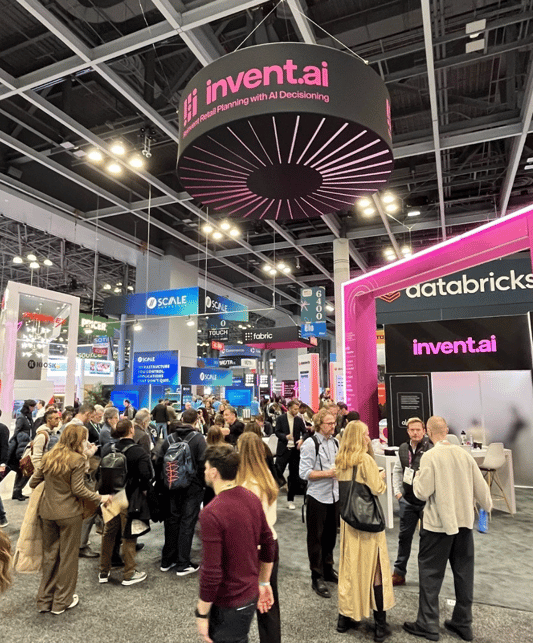 A consistent theme at NRF was that retailers want systems that turn insight into coordinated action. Technology alone doesn’t drive results; it’s how insights are applied across merchandising, inventory and planning that matters.
Leaders are asking practical questions: Can decisions be aligned to reduce overrides? Can forecast-to-buy accuracy be improved? Can allocation reflect true demand while supporting SKU growth?
The conversation has shifted. Retailers aren’t asking what tools can do in theory, they’re asking how they help teams act faster, more confidently and in alignment with strategic priorities.
Technology without alignment falls short
Another clear takeaway: technology in isolation is insufficient. Retailers who succeed combine structured decision frameworks with systems that coordinate across functions.
Point solutions may generate insights, but without orchestration, they often increase complexity. Real advantage comes from clarity, alignment and execution that compounds across the business.
NRF reinforced what we see every day: the way decisions are made is evolving. Leading retailers are moving beyond more reports and tools to systems that align teams, amplify insights and accelerate execution.
How invent.ai helps retailers execute with confidence
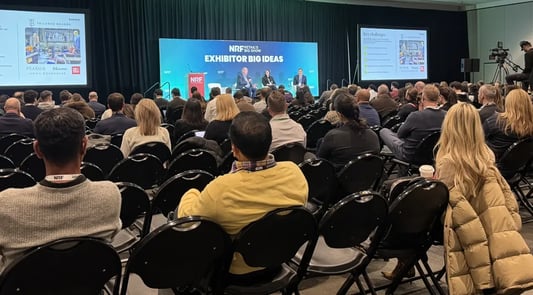 At invent.ai, we help retailers turn insights into coordinated action. By connecting merchandising, inventory and planning decisions, teams operate with confidence, reduce manual intervention and see results compound across the business. When decisions are aligned, teams can react more quickly to changing demand, reduce costly overrides and free up working capital to invest in growth opportunities.
In sessions with ALO Yoga and Tailored Brands, we explored how teams can synchronize merchandising and allocation decisions to optimize inventory velocity while preserving margin. Later, discussions with Tecovas and Mattress Firm focused on scaling SKUs and aligning allocation with customer demand, all without adding headcount or operational complexity.
As retail continues to evolve, the winners will be those who treat decision-making as a coordinated system rather than a series of disconnected functions. Platforms that enable this orchestration won’t just support the business, they’ll define how the business grows.
See invent.ai in action and explore how coordinated decision-making can accelerate your business.

Prof. Gurhan Kok founded invent.ai in 2013 to develop advanced analytics solutions for the retail industry. Before invent.ai, he was a tenured faculty member at Duke University’s Fuqua School of Business. He received his Ph.D. from The Wharton School, University of Pennsylvania in 2003.